
Listen to full episode :
Transcript
Netta (00:00)
This is what I think is wrong with the movie.
Steph (00:01)
Okay,
tell me.
Netta (00:02)
Kevin O'Leary is not anti-Semitic enough. Basically. That character.
Steph (00:05)
You're like,
like, let me tell you how it is. Not at all what I thought you were going to say, at all. Not that.
Netta (00:09)
What did you think I was gonna say?
Welcome to Popcorn Moms, the podcast for parents who love their kids most but loved movies first. We're your co-host, Netta.
Steph (00:25)
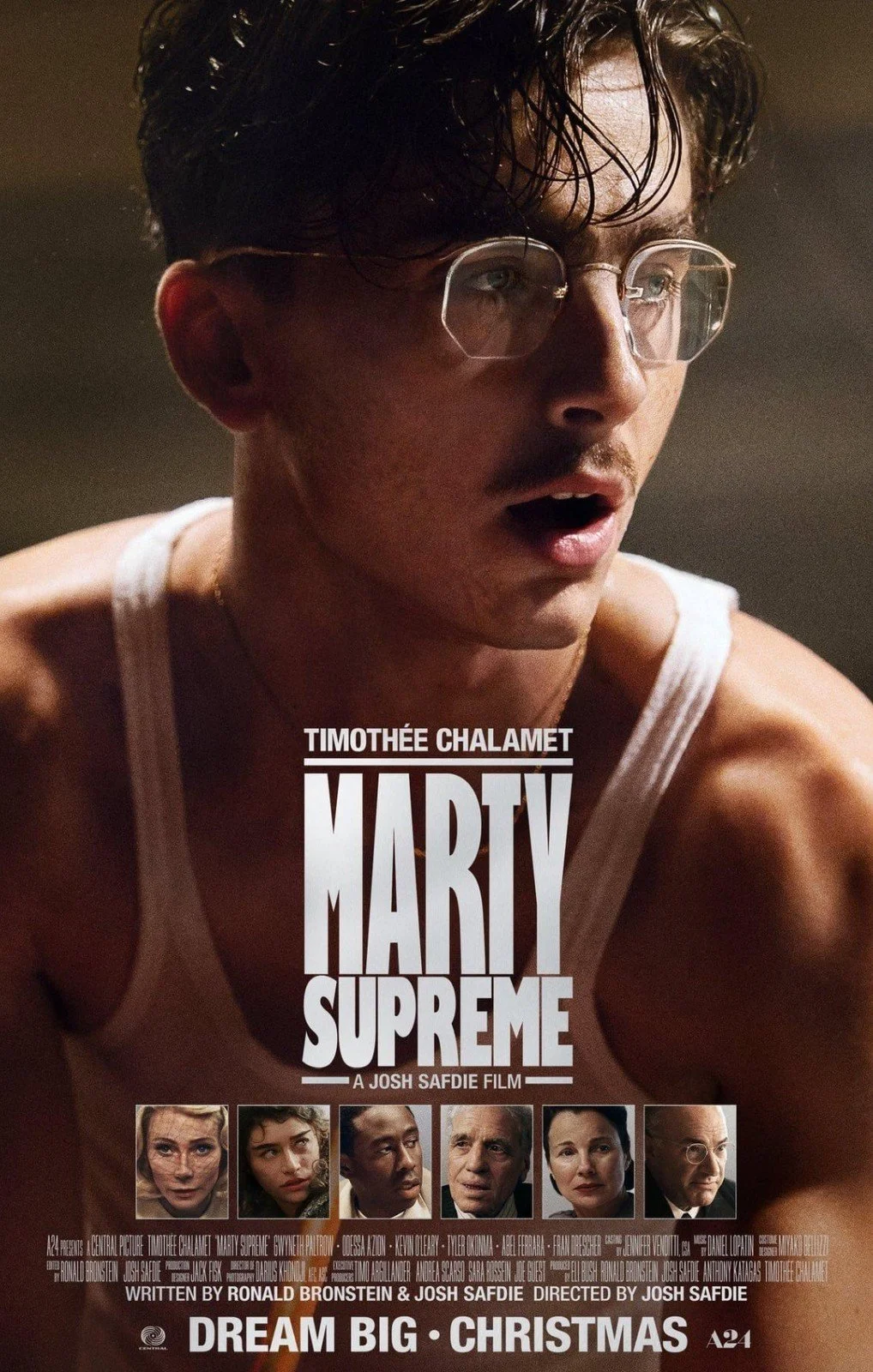
and Stephanie, two movie lovers turned moms. Join us as we reconnect with the things that make us whole outside of parenthood, namely watching movies about unhinged ping pong players. Yes, we are talking about Marty Supreme. Marty Supreme is a 2025 American sports comedy drama directed by Josh Safdie, starring Timothée Chalamet as Marty Mauser. In 1952 New York City, Marty Mauser is a young Jewish man with a great talent for table tennis.
However, he suffers a humiliating defeat at the Table Tennis World Championship. A year later, Marty has to come up with the cash to get to the championships in Japan and very little time to do it. This was Netta's pick. So why did you choose this movie?
Netta (01:06)
Well, I saw this movie in theaters in like December with Eric. I really, really enjoyed it. I just kind of left being like, I really want to talk about this movie with somebody. And that's you.
And then now it's like it's nominated for a bunch of Oscars and that's coming up soon. And we haven't done like a sports movie yet. And I was also curious what I would think watching it for a second time. So yeah, that's, that's why I chose it. What did you think?
Steph (01:21)
Yeah.
Yes!
say a couple things first in response. So I will say after we watched it, Sean said, I really want to watch it a second time, or I feel like I need to watch it second time. And it made me think of you because I remember when you suggested it, you had just seen it. And so was like, really? You watch it again, but you wanted to watch it a second time. So I'm now interested upon viewing twice what you think of it. And yeah, I do remember you saying like you just wanted to talk to somebody about it. So that's but you didn't tell me if you liked it or not.
Netta (01:41)
Mmm.
Steph (02:00)
I could maybe surmise that you did, but I don't know.
Netta (02:03)
Well, what did you think? Did you like it?
Steph (02:05)
All right. I got a lot. I got a lot to say. I think I feel many things. I struggle with this one because I didn't not like it. I didn't. Yeah, so I didn't hate it. I did not like it. I didn't love it. I think a few things that we can discuss, I think.
Netta (02:08)
Yeah. ⁓
Mm. Mm-hmm.
You didn't not like it.
Steph (02:32)
my viewing of it, I hate to say it, was quite impacted by what other people like sold it to me as. went in cold by the way, like I didn't watch a trailer, I didn't read a review, I didn't read the synopsis, nothing. Like the fact this was about ping pong was a complete shock to myself. And so the way that it was set up to me, which we'll talk about, I feel was a
Netta (02:38)
Mmm.
Okay.
Steph (02:54)
bit of a mislead. Like I would not characterize the movie that way. So I think that set me off. And then the other thing I'll say, which I don't say often. I feel like I might be missing something like sometimes when I think a movie is bad, it's like that movie's bad. Like people who like that movie, it's like, why? I don't get it. But this time, like. Am I missing something? Maybe.
Netta (02:55)
Mmm.
Mm.
Steph (03:17)
You know what? I loved the first hour. I loved it through and through. It had me. And then slowly over the course of the movie, it lost me. And I think that's why I'm struggling. That's why I'm struggling.
Netta (03:27)
Hmm.
Steph (03:29)
Okay. You go.
Netta (03:30)
So,
yeah.
So in a way, I think you are missing something, but I think the movie did not provide that thing. I think that there is, I do really like this movie. I like the energy, I like the pace, I like how unexpected it is. I really like that I did not know what was gonna happen next and I was not thinking about it.
Steph (03:32)
Yeah.
I think I am.
Yes, I agree wholeheartedly
Netta (03:59)
That's not a very usual experience at this point, right? When you're watching a movie. To me, it did not feel very long. Okay, sure. ⁓ But I think something kind of clicked right at the end.
Steph (04:00)
⁓
Okay, we-
OK, we have to come back to that. But yes, OK, it didn't feel long for you. OK.
Netta (04:17)
that made sense of everything. And I think upon second viewing, I could kind of bring that in and pretend as if it was there, but it's not. As in, think this is potentially, this is almost an amazing movie. I think in many ways, I think it is, but I think it has this big flaw. I don't want to start with the big flaw, but I think I don't want to start there, but go on.
Steph (04:23)
Yes.
⁓
feel? I feel like,
no, I feel like you're you're putting into words what I usually struggle with is like how I feel. But like, I'm struggling with it because it is essentially an amazing movie that just struck out that. Yeah, it's like. Everything is working and it's good, and then it just like stops or it just like doesn't or yeah, I don't know. Like I was saying to Sean.
Netta (04:54)
doesn't click into place.
Steph (05:08)
I couldn't help. OK, I'm probably jumping ahead, but I couldn't help but think about another movie I watched recently. Very similar Vibes that was done. So much better. Potentially, no, I can't, because we might watch it next. And now I've just blown the lid off that.
Netta (05:16)
Which one?
I was thinking, okay, could we start by talking about the music?
Steph (05:25)
Yes. said passionately because that became one of the most interesting things to me, which I don't think is a great look for the movie itself, but it was a great choice in the movie. Go on. What were we going to say?
Netta (05:32)
Mm-hmm.
Mmm.
Yeah. Yeah.
Well, I have thoughts about the 80s music in this kind of period piece set in the 50s. The 80s music was so, it really stood out in a way that I think was very effective.
Steph (05:48)
Mm-hmm.
Yeah. Yeah.
All of the music in this movie is from the 80s or 80s sounding. And like even the like score, very 80s. There's only, think, like one scene where they lean into like the music of the era when they get out of the car and they're dancing alongside the car. And that stands out because it is kind of the only time.
Netta (06:02)
Mmm.
Yeah. Yeah.
Steph (06:15)
that the music of the era is played. Otherwise, it's 80s music. And I was so fascinated by this.
Netta (06:15)
Mm-hmm.
Steph (06:22)
it was such a deliberate choice. Like it was so deliberate. Like this is movie that takes place in the 50s that I don't know the 50s very well, but for all intents and purposes, it's like looks pretty authentic to that time. Like the actors, the look like it's so good. And then you throw in this like very like synthy upbeat 80s music. Why was this done? Because I had a suspicion that 80s music is very fun.
Netta (06:42)
Mmm. Mmm.
Steph (06:47)
very lively. It's very like a beat and things are happening and it's moving. And yes, the thing that I read. was like they made this choice to use like 80s music because to try to mimic that like chaotic fervent like nature of him and things are moving and it's spunky and it's fun and it's lively. And so I really enjoyed that choice.
Netta (07:06)
Totally. I feel like, okay, here's my thoughts. One, I think that, and I could be wrong about this, I'm pretty sure that like table tennis had kind of a moment in the 80s.
Steph (07:10)
shoot.
Pong. Pong. Atari. Pong. Yeah, I'm like, wow, I'm just connecting these dots.
Netta (07:19)
Hmm. No. Pong. Yeah. Yeah, exactly. Yes. I didn't even think
about that. So that's why we have each other to bring the dots. To bring the dots. But I think it's also that the 80s were kind of the heyday of like the sports movie where like sports were
Steph (07:31)
Yeah, yeah, because I didn't think about that.
Netta (07:43)
the arena in which it was like America versus its enemies, right? So like, like, right? Like this is this is a theme.
Steph (07:50)
Wasn't. Yeah,
like Rocky, whatever the most famous one when he fights the Russian.
Netta (07:54)
Rocking.
Yeah, always the Russians. I think that it's like ⁓ a particular kind of sports movie that it's referencing or that it's kind of like calling back to which is a yeah, a kind of like national pride.
that there's something bigger at stake in the outcome and that this is a test not just of the individual, but of the group that the individual is part of and that they're standing for. I also feel like...
Steph (08:11)
Yeah... Yes.
Mm-hmm.
Netta (08:24)
the 80s is kind of an interesting time to like pull the music from because it is, I mean, it's old, but it's not that old. It's very familiar. It's still part of the culture.
Steph (08:33)
Yeah. Errr. No, it's-
Yeah, I was gonna say it's still it feels very like of today still.
Netta (08:43)
Yeah. And it, because of the synthiness, it has kind of like even a future-esque kind of vibe, kind of sound to it too.
Steph (08:51)
Mm-hmm.
Netta (08:52)
there's something kind of like, forward pushing about this or future looking about this.
Steph (08:57)
Yeah, it's like,
I was thinking you were going to say like it's ⁓ contradictory to like time maybe is what you're going to say. ⁓
Netta (09:04)
Yeah. Yeah. Yeah, that
Steph (09:08)
But the sports movie thing, if we could just digress into that direction for a second. I absolutely.
Netta (09:08)
Yeah. Mm.
Yeah.
Steph (09:15)
love sports movies. It is a yes, it is a genre I am very passionate about. I feel like it was maybe two years ago around now, maybe in the in the winter spring. I dug deep and I watched probably like 50 sports movies like boom, boom, boom. I got in a like a zone, man. I just ripped through these things like I wrote all like I made this huge list and I just ripped through it. And because I love sports movies so much.
Netta (09:17)
do you?
Well.
Mmm.
Steph (09:43)
I made a note somewhere to like, as soon as I realized this was going to be about competitive ping pong, I was hooked. Like I was in it, man. And then I started reflecting because I knew you're going to ask, why do I love sports movies so much? I think because I am incredibly competitive. So I love competitors like I'm a very competitive person, and so I love movies that kind of mimic
Netta (09:49)
Mm-hmm.
I know.
Mmm.
Steph (10:10)
that like drive an ambition to like achieve something to win, whether it be like the underdog or the superstar or whatever. It doesn't matter like what sport, like even golf, like a good competitive golf movie. I'll take that. ⁓ The more I know about a sport, the better. I do think that the football movies are the best for some reason,
Netta (10:21)
Hmm.
Mm-hmm.
Steph (10:32)
Baseball movies, obviously very close to my heart. But yeah, I love a good sports movie. So this being like a sports movie kind of was very fun. However. It lost me a little bit because it was for but a brief moment, a competitive ping pong movie, and then it went in a different direction, which I think added to my
Netta (10:39)
Mm-hmm.
Yeah.
Yeah.
Steph (10:53)
disappointment.
Netta (10:54)
So, okay, so you were saying earlier that you feel like you were set up with the wrong expectations of this movie and that kind of shape. So what was that?
Steph (11:03)
rarely have I gone into a movie cold. And I think. Maybe I should, maybe I shouldn't, maybe I should have done my own kind of like looky loo. I don't know, right? It is such a good sometimes it's so fun. Yeah.
Netta (11:10)
It's such a crap shoot. I think it's such a crap shoot. Sometimes it's great. Sometimes, and sometimes
the trailers really mislead you. And sometimes they really set you up for a successful watch. I don't know. Yeah.
Steph (11:19)
I know.
I know. And I had heard
this movie was great. I did want to see it. So great. Let's let it rip. So a couple of people who I'd said, like, we're going to watch this movie. their reactions were very much like, ⁓ my God, like it's such a wild ride, this very intense, visceral, like over the top, nonsensical,
really intense.
I think I was kind of being set up for this, like. Really, really intense trip, and I think. In some ways, this is like an intense thing, but not in the same way that the things people said it was like are, if that makes sense.
Netta (12:00)
I would like you to expand on that because the first time I watched it in theaters, it did feel very intense. It did feel very frenetic to the point that like when the movie, the second time that I watch it, like for our discussion, I was surprised at the beginning when it's like, you see him kind of have good relationships with some people and he's like genuine and it's
Steph (12:05)
I know I want to hear about that. ⁓ interesting. ⁓ OK.
Mm-hmm.
Netta (12:25)
it's not like that. And I just remember thinking like, did it feel that way because I saw it in theaters? Or is it the case that it just like the freneticism kind of builds up later on? And that's what I remembered. Like that's what I was left with at the end. And I just didn't really remember the kind of earlier sort of more of the buildup to it and kind of seeing the
Steph (12:31)
Mm-hmm.
Mm-hmm.
Mmm. Mm-hmm.
Netta (12:47)
this other kind of maybe side of his personality. So yeah, so I'm, and I'm still kind of torn on that. If it was like the setting or if it was, you know, the number of watches or if it was whatever, but I'm wondering, like what do you think of as like an intense movie that this was not?
Steph (12:59)
Mmm.
You know what it is now that we're talking about it. I feel like a lot of the movies that people are like, it's like this or it's like this. Those are all very like dark movies or negative. And so like they're very intense and they're very like energetic and they're very like. Frenetic but it's it's like a heavy energy, maybe or like not necessarily dark, but like.
Netta (13:13)
Mm.
Steph (13:25)
There's an absurdity to it, but it's like a darker absurdity, whereas this wasn't. I feel like a lot of those movies, too, like the main characters are characters of which like you're not supposed to like them. And this movie, like I want to like.
Netta (13:28)
Yeah, yeah, that
Steph (13:40)
Do you like him? Do you not? Are you supposed to like him? Are you not supposed to like him? Like, I don't know.
Netta (13:44)
I think.
I don't really care if he's a likable character right now, to be honest, because I feel like, I feel like, so, okay, when we walked out of the movie, Eric and I, what he said was, he thought that this was like a great portrait of a boy who thinks he's a man and is not yet. Of, of, yeah, like this is somebody who's kind of like on the cusp of
Steph (13:54)
Yeah.
⁓ ooh, Eric. Yeah.
Netta (14:08)
but is not there. And then at the end, when he basically takes responsibility for his child or kind of claims his child, that's sort of a turning point for like another stage in his life where presumably that will happen. But that this is really, this is about like somebody who thinks they're a grown man and is not at all. And so, I don't know, I feel like yes, a character at that.
Steph (14:15)
Yes.
Mm-hmm.
Netta (14:33)
stage of life is like very easily dislikeable.
So like, he's so arrogant. He's so arrogant. And it is so much his downfall in a number of times.
Steph (14:37)
Yes.
Yeah.
Netta (14:45)
I think there's things about his character that could make more sense. if the villain was played better, to be honest, I this is like, kind of getting now to like what I think is wrong with the movie. Okay, this is okay, let's just talk about this now.
Steph (14:52)
Hmm.
I know I was like, go on.
Netta (15:02)
This is what I think is wrong with the movie.
Steph (15:04)
Okay,
tell me.
Netta (15:05)
Kevin O'Leary is not anti-Semitic enough. Basically. That character.
Steph (15:08)
You're like,
like, let me tell you how it is. This is exactly how it is. Not at all what I thought you were going to say, OK, at all. Not that.
Netta (15:15)
What did you think I was gonna say?
Steph (15:21)
I do think it's
very interesting that you mention the villain because I'm like, my God, yes, something is there. We talk about movies being tight sometimes. There's many things that were a little loose
Netta (15:31)
Mm-hmm.
Steph (15:33)
for me.
Netta (15:33)
were losing...
I feel like they were tight but not connected in a way. So, okay, so this is the thing. I think this movie is set up in a way that we are supposed to understand that anti-Semitism is like part of the air that he is breathing, part of what he is pushing against.
Steph (15:39)
Yeah. Yeah. OK, let's hear it.
Yeah.
Netta (15:56)
what's limiting him, why he takes on all this arrogance and all this whatever. Like this is all taking place in the shadow of the Holocaust. We have that honey scene that we can talk about. But there's so many indications of this throughout the script. So the fact that like the main villain, Kevin O'Leary's character, like the first time you meet him, he sees that Marty's friend,
Steph (16:01)
Yes.
Mm-hmm. Yep. Mm-hmm.
Netta (16:20)
is has like the the tattoo, the number tattoo,
and says something like, you know, my, my son died freeing you liberating you to which Marty, think Marty says, know, something quite impertinent, like, what I thought he was freed by the Russians, he was freed by the Soviets. Yeah, yeah, yeah. And it's something exactly. Well, but I think it's a
Steph (16:26)
liberating you. Yeah.
Yeah, yeah, weren't you free by the Russians like he turned immediately to me I was like wait wait a second like he took it so literally
Netta (16:44)
I mean, I do think it's a fair point, but also, I mean, it's a kind of comment coming from the O'Leary's character that like, you could take to just be, you know, a guy whose son has died and it's very painful. You know, that could really be it. But I think as it goes on, you see...
Steph (16:45)
Mm-hmm.
Yeah. Yes. Yes.
Netta (17:03)
kind of other dynamics going on there. And then what really cinches it, what kind of made a click the first time around, the first time watching it, was at the end when Marty is playing the exhibition game and he is set up to lose by O'Leary, like that he's agreed to lose.
Steph (17:05)
Mm-hmm.
Mm-hmm.
Yeah.
Netta (17:21)
But what O'Leary has not discussed with him ahead of time is that the loser has to kiss a pig.
Steph (17:25)
Kiss
the pig. Mm-hmm.
Netta (17:26)
This is, I mean, obviously demeaning no matter what, but pigs are kind of like the emblematic non-kosher food, the kind of non-kosher item. And there is this kind of subtext of antisemitism in that act, of the particularly kind of demeaning act of making a Jew kiss a pig. I mean, this kind of, you know. And it's like, when I saw that, I'm like, ⁓
Steph (17:30)
Mm-hmm.
Mm-hmm. Mm-hmm.
Yeah.
Netta (17:50)
Yeah, I think O'Leary was supposed to actually just be anti-Semitic throughout. That was supposed to be part of the subtext. And I think O'Leary's character was supposed to kind of embody the anti-Semitism that otherwise feels a bit abstract and doesn't necessarily have a super explicit way to come into it.
Steph (17:51)
Mm-hmm.
Yes.
Mm-hmm.
Mm-hmm.
Netta (18:10)
Again,
I think you kind of get hints and pieces and things, but I think O'Leary's character was really supposed to bring that. And my theory is that O'Leary was not a skilled enough actor to bring that subtext in.
Steph (18:18)
Mm-hmm.
Yeah, okay. So a few things there. When he did make the comment about the tattoo on the guy's arm, I did take that as a very rude anti-Semitic comment. Like not like, I'm a grieving father and like I took that as like a personal slight. But then to your point, whether it be the acting or writing, whatever, like something around that got lost a little bit throughout. And then you see him and Marty
Netta (18:39)
Mm.
Steph (18:48)
get into like a verbal disagreement. I think it's following that when they're talking about the exhibition game and Marty says something extremely rude about his son dying. it like makes you feel for like for a second for Kevin O'Leary's character. And then it really detracts. Like both of these men are jackasses.
Netta (19:04)
I think.
I think that first interaction, it could go either way. This guy could just be generally bitter and not very sympathetic, or he could be just full-on anti-Semitic. But then in all their future interactions, I think what you see is Marty being an arrogant asshole and this guy who's also kind of an asshole, an arrogant asshole himself, pushing back.
Steph (19:14)
Mm-hmm. It could go either way. Yes. Mm-hmm. Mm-hmm.
Yes.
Yeah. Yeah.
Yes. Yeah.
Netta (19:39)
Right? But he's a more reasonable, arrogant asshole. What you don't
see is a Jew and an anti-Semite.
Steph (19:45)
Yes, yes. Very. Because I didn't at all, like it really went to that, these two arrogant jackasses going at it. Is where it went for me.
Netta (19:47)
which I think it's part of what, no.
Yeah.
And I think that if that had been there, a lot of other stuff would have made sense. I think his arrogance would have been understood at least in part as defiance, as like what is needed, as like what's required to thrive or to kind of rise above this stuff. I think that the whole kind of like,
Steph (20:09)
Yes, versus like ⁓
Yeah. Yes.
Netta (20:19)
environment of like Jewish New York, post Holocaust Jewish New York would have made like the dysfunction that you kind of see in his family in the building, everybody's on top of each other, blah, blah, blah. I think even that would have felt a bit more like, like there's a kind of wider world that's pressing in on this.
Steph (20:29)
Mm-hmm. Yeah.
Mm-hmm.
Netta (20:41)
Like this isn't just a thing of like, you know, crazy Jews or dysfunctional Jews and like they're crazy mothers or whatever. This is a thing of like a community under pressure. Yeah, I just, think that a lot more about his character, about his journey would have made so much more sense because then you get to the end and it's like he's so triumphant when he does win.
Steph (20:46)
Yeah. Yeah.
Hmm.
Netta (21:05)
So he's like,
he, you know, okay. So at the end, finds out that he shut out from the actual championships, which is what he went through hell to get to, but he's not actually gonna, he's like so close yet so far. He does this exhibition match, even though he knows he's not going to get to the, like the reason that he's going to put up with losing this fake game.
Steph (21:12)
Yes.
Yeah, it's together.
Netta (21:26)
is to do
is to do the real championships. He knows he's not gonna do that. He still goes through with losing.
Steph (21:32)
Mm-hmm.
Netta (21:32)
And then he finds out that in losing he has to kiss a pig and he says, no, no, no, no, no, no, Let's have a real game. And they do the game. It's him and this Japanese guy. And that's a whole like very interesting kind of post-war thing in itself. Yeah.
Steph (21:36)
Mm-hmm. Yeah.
Yeah, I was going to say there's a whole thing itself there
with the Japanese situation.
Netta (21:53)
Yeah.
And he wins. So he doesn't have to kiss the pig. But it's not just about not kissing the pig. the level of triumph that he has, like, what is he triumphing over? This is not like a, like this thing of the, this kind of calling back to
Steph (21:58)
Mm-hmm.
Netta (22:12)
sports movies of the 80s where it was about like America versus its enemies, like America versus Russia. That's not what's going on here. This isn't about America versus Japan. This is about like a Jew versus an anti-Semite. Right? Like when he triumphs, that huge triumph at the end is meaningful because of that or would be. And then he goes back home. He claims his son. He like breaks down into tears.
Steph (22:16)
Mm-hmm.
No.
Yeah, but that's missing.
Hmm.
Yes, yes.
Netta (22:38)
And again, I think this would have made much more sense if that anti-Semitism angle was actually present because like, like he has that line early, like very early in the movie where he's talking to reporters and he says like, I'm Hitler's worst nightmare, which I loved. Yeah. Yeah. I loved it.
Steph (22:53)
Oh my God, that was so they really caught me off guard and was hysterical because the reporters are like,
why? And he's like, well, when you think about it, it was like he has thought about this.
Netta (23:05)
But the thing is, he's not,
the thing is, it's not that crazy of a thing to say. Like this idea of like Jews thriving, Jews winning, that was very much not in Hitler's designs. But the thing is also like Jews having children was also like for a lot of Holocaust because the purpose of the Holocaust, because the purpose of
Steph (23:11)
Yeah.
Yep. Yep.
No.
Netta (23:29)
the Nazis was to eradicate Jews. Like for a lot of Jews after the Holocaust, like having babies was kind of a middle finger to the Nazis and to Hitler. And so like he gets home and it's like, you know, I just triumphed over the anti-Semite, whatever. And then I get home and I see this baby and like, this baby is actually Hitler's worst nightmare. You know, it's like this other triumph, but like in a totally different way.
Steph (23:32)
Mm-hmm.
And I have this baby. Yeah. Mm hmm. Yes. In a totally different way.
Netta (23:58)
Anyways, this was all missing, upon second watching, upon second watching, I could pretend it was there.
Steph (24:01)
I know. ⁓
Yeah, because I was like, where's
it's so funny because the end to like it hits him in a different way. But like he like I really, really like that scene because you can tell it's hitting him in a different way. And I can see what you're saying now. Like you almost see it going from like, cool, I'm a father like this boy to like realizing like he is a Jewish man has made this beautiful life with this woman. And like it goes into this like very touching place.
Netta (24:09)
You
Steph (24:33)
the way he's acting when he sees this baby. But what's interesting about everything you just said does not come across at all in first watch at all. So that's a shame because that's beautiful and that's wonderful. And that's like such a better, well-rounded story.
Netta (24:40)
No,
And I know, I think
it's Kevin O'Leary's fault. That's my theory. don't know. I don't know. Say more.
Steph (24:52)
Really? I don't... I would argue it is not.
Well, he can only...
with the lines that he is given and with the story that is being told that he is being like told to portray because like unlike some actors who really like like Kevin O'Leary, I was like, Whoa, how is he in this movie? Is he an actor? Like what's going on? And then it's like, he did pretty good. But like he's not like ⁓ like a Gary Oldman or a who's Daniel Day-Lewis like
Netta (25:14)
I know.
Steph (25:24)
He's not going to shape something and take it and really look into the subtext of the character and what are they bringing to the table in this scenario? A story is written and directed and shaped if he's not being given those directions I just feel like there was it was a group loss.
executed and Kevin O'Leary is like at the forefront of that and he just wasn't good enough to make up for maybe what wasn't there.
Netta (25:49)
I think, okay, yes, as in I think he should not have been cast. I think he should not have been put in that position. But I think a different actor with the exact same lines, the exact same script, the same director, the same everything could have made it work for sure, for sure. Another actor could have brought that subtext in. And maybe it is like you're saying, maybe it is the direction and who knows, maybe he did bring that and for some reason in editing, they decided, you know what, we're not gonna go in that direction.
Steph (25:53)
Mm-hmm.
Really?
I don't know, man.
Maybe.
Netta (26:14)
We don't actually know, but I think that like that, the clarity of that and like the real kind of anchor of all of that was supposed to come from that character. And whether it was because of O'Leary or because the direction he got or whatever, I think the script had enough there that a skilled actor could have brought it in.
Steph (26:16)
Mm-hmm.
Mmm.
the reason I kind of go back to this idea
of like, I don't know, is because the script and the writing leaned more into this like, like we're two arrogant guys going at it. One is old school he's been around the block and he thinks he knows it all. And then Timothée Chalamet's character is like young and
fresh and like arrogant. He doesn't have anything to back it up yet, but he is ambitious and he knows what he's going after. He's also sleeping with the other guy's wife. And so he's like secretly doing that as like you and like toying with both of them. Like to me, it was much more them as
Netta (27:08)
Mm-hmm.
Steph (27:11)
cut from the same cloth, but like in different eras. And so like I miss that completely. It wasn't a through line enough.
Netta (27:13)
Yeah.
Mm.
I mean, maybe I think it's I guess it's hard to know. But I do think that if if Kevin O'Leary could bring it, could have brought that, I think that would have been enough with everything else that was in there. Yeah, I think so. Like, like one thing, you know, like when he goes to Egypt
Steph (27:23)
Yeah.
for you just like to. Yeah.
Netta (27:39)
So there's this whole sequence where he's with the Harlem Globetrotters, basically doing like a monkey act with the the ping pong with his friend. And it shows them going to like all these different places, all these different cities in the world. And I mean, what's interesting is you don't really see them in those cities for the most part. They're just like in an arena, like it could be any city in the world. But there were two that stood out. One was Munich.
Steph (27:43)
Mm hmm. Doing the halftime shows. Yeah.
Mm-hmm. Yeah, various arenas. Yeah.
Netta (28:05)
That's the one where you don't see them actually performing. You see them on the sidelines watching the Harlem Globetrotters perform and they just look very uncomfortable. And then the other one was in Egypt where you also don't actually see them perform. You see them like at the pyramids, at the side of the pyramids, like as tourists. But there's Marty Mouser chipping off a piece of the pyramids, which when I watch I'm like, what the? What are you doing?
Steph (28:13)
Mm-hmm.
He's chipping away!
Mm-hmm.
Netta (28:31)
And then later he gives that piece to his mom as a gift and says, we built that. It's still there, something like that. Which I just thought was really kind of encapsulated a lot. I feel like that story of him chipping off a piece of the pyramids that according to Jewish tradition was built by Jewish slaves, I don't think that's historically accurate as far as I know, but whatever.
Steph (28:48)
You
Netta (28:56)
and giving that to his mom as a gift and saying, what we built is still there. Like, just all of that kind of really encapsulates, I think, a lot of like what the movie as a whole is supposed to be.
Steph (29:01)
Hmm.
Yes, I was going to say it's supposed to be supposed to be. I agree with you because there are like it is very interesting on second watch what you're pulling because I can close my eyes and like think about if I could string together this movie in a different way and potentially recast Kevin O'Leary as per your recommendation. It becomes an incredible story around
Netta (29:10)
is supposed to be.
Steph (29:33)
being somebody in a place when you're not supposed to be somebody and overcoming that and having a triumph personally and for your community but it just missed the mark.
Netta (29:42)
That's the thing. there's this thread missing that would tie it all together. Yeah.
Steph (29:45)
Yeah.
Oh, that's so interesting, because I said I said to Sean, it's like, you know, like, yeah, we talk about movies being really tight and I feel like this movie is like the knot is perfectly there and everything's there. And it's like you just have to pull that thread to tighten it up. I couldn't put my finger on like what that thread is that would like bring everything together and like really button it up. Maybe that's it.
Netta (30:10)
But you know,
since I picked this and I knew we were gonna be talking about it, I was kind of, like, I had no idea how you were gonna react to this movie. Like, I had no idea if you would like it. I had no, like, cause I thought you might, I thought you might not. Like, it really felt like it could go either way. But I was like, is she gonna come and say that there's like something off about it?
Steph (30:18)
Mm-hmm.
Netta (30:30)
But then I was very curious, if you didn't, if you thought, no, this is a totally complete movie, blah, blah, I was very curious how that would have seemed, but yeah.
Steph (30:30)
I
No. It was. And
I think this is what one, did you think there was a world where I wouldn't like it, like actively not like it? No.
Netta (30:47)
No, I think it's
like too high quality for you to hate it. It was fun, right?
Steph (30:50)
Too fun. Yeah. Yeah. It's it's fun.
And it's like it's too fun. It's too high quality. It's too unique and too different. Like you got a mad props to movies that are original stories and interesting and different and like drawing in like qualities of like uniqueness in many ways. Like it's not just like a guy wanting to be good at sports. It's ping pong, which he insists the entire time calling table tennis. Very professional, which I thought was hilarious. But also you have.
Netta (30:58)
It is so, yes.
Yeah. Yeah.
you
Steph (31:17)
the Jewish community thing, but also then you have like an affair with a movie star. Like there's just so many fun things happening there. Right. So of course, I'm not going to hate it. Whether I like love it or like want to love it, the top. And I feel like that's what pisses me off, frankly, because I feel like it's so, so close that something was missing. And to your point, sometimes I don't know what's missing, but something was missing. It was also too long. But.
Netta (31:42)
You
Steph (31:43)
If that thing was there, would it have not? It's like, it's like all the pieces were there, but the board underneath, like it didn't have like that solid ground. You're making a face. I'm thinking about like, yeah, cause I'm thinking about like all these fun pieces are there. When you look at scenes individually or you look at like, it's like, that's fun. That's fun. That's fun. But you put it together.
Netta (31:56)
Yeah, that's such a good way to put it.
Steph (32:08)
And you start to see cracks and holes and like it just there's no solid through line like you said to like to like not explain his drive, but when he goes back to America, like it really lost me there. And like it just it's it starts to get some movies are fun because they're absurd. But then it started to just get so it's interesting. You said you didn't know what was going to happen next. Sean called like everything.
Because it's just like all the ways in which it could go wrong, it was going wrong. But in many ways, like outside of his control, it was just getting silly. Like it was like there was one too many like storylines going on. But with this subtext to prop all of that up, I think it would have been much more interesting.
Netta (32:40)
Mm. Yeah.
Can I ask, when you watched it, like...
that end scene where he's like, he wins the match. And he's like, so, it's like such a big deal. It's so triumphant. Like, did you, watching it, what did you think he was, why was it such a big deal?
Steph (32:56)
Yeah.
Mm-hmm.
Yeah. So like, because that like subtext was missing.
Netta (33:09)
Well, as in like, I think by the time that happened, basically what made a click was that thing about like kissing the pig. And I'm like, this is an anti-Semitism thing. This whole thing has been an anti-Semitism thing. So then by the time they get to the end of that match and he wins and he's so triumphant, it's kind of like, I get it in terms of this is triumph over an anti-Semite or this is a triumph over that. But like without
Steph (33:17)
Yeah.
Yeah, yeah.
Mm-hmm.
Netta (33:34)
that I guess I'm not sure like he did I mean he had to work so hard to get there so I guess that I don't know
Steph (33:36)
Mm.
For
me, yeah, so without any of that, like for me, it read as pride. Like a like I at the other championships, I lost. I thought I was going to win. I should have won as like as he's saying, like they shouldn't have been there. Remember, there's this whole thing around like the travel ban. But then they were there and it freaked him out and then he lost. So for me, it was about getting back.
Netta (33:48)
Mm.
Yeah.
Steph (34:07)
to like reclaim this idea in his mind that he was the best and to prove himself as the best. so even if it didn't matter, this is how I read it, even if it didn't matter for any reason whatsoever, he just wanted to know that he could beat him. And so when he did beat him, he was so happy that he beat him and it was like, was like, OK, I know I'm the best. I can go home now. That's what it read to me, which wasn't. Good.
It's so- ⁓
Netta (34:32)
No, that's a very unsatisfying, it's like somebody loses their pride
and this is their journey to regain their pride, which I guess, but like, but it's like this is a journey to regain his arrogance, I guess is how it comes across yeah, that's very interesting.
Steph (34:39)
That's what I read it as.
Yeah.
And you're like,
yes, that's highly problematic.
Netta (34:49)
Yeah, I mean, it's not problematic. It's just like, it's kind of a shitty journey. Like, it's a shitty, like, as a hero's, as far as hero's journeys go, what you want is for somebody to arrive in a new place where it's not about the arrogance, it's not about that, it's about something bigger.
Steph (34:51)
It's just-
It is, and so...
Yeah, it was.
Yeah. No!
Yeah, for him, I thought it was about a total fuck you to the guy who was running the ping pong alliance or whatever it was called as an FU to Kevin O'Leary as an FU to Japan, I guess. And everyone else. No, it doesn't. Everyone else like his mom to like everybody like he just wanted. And like, so when he's standing there on his own and he's cheering for himself, like I felt
Netta (35:19)
That doesn't make sense, right? Like it's not about Japan. Yeah.
Yeah.
Steph (35:32)
bad. Like this is a guy who's like gone through all this just to say like, okay, I'm the best. But what does he have at the end of it? He's lucky that I know he's lucky that when he got home that his friend wants to be with him.
Netta (35:40)
That's so sad.
Yeah, that's so sad because I feel like what, so it's sort of like he starts in this very individual place and he ends in this very individual place. Whereas I think like otherwise, but I feel like what it's supposed to be is like going from it all being about me, me, me to being about this bigger thing, to being about who he is as a kind of
Steph (35:53)
Yeah, I kinda was like-
Netta (36:06)
as part of a people, but then also being able to go home and say, you know, my life is not just about me anymore. It's about this child. It's about this woman. It's about this broader community, whatever, you know? That, yeah.
Steph (36:06)
Yeah, that was.
Mm-hmm.
Yeah, and that didn't land. And I was feeling when he went
back and he went to her side and he's like, OK, I'm here. I'm not going anywhere. I love you. And then he goes to me. He's I didn't like, OK, until you have the next dream, like because your dream was to be the best and to put America on the map when it came to table tennis. So you still haven't done that. So what's like it just it fell flat at the end. And Sean said to that he kept saying like the payoff for all of this better be worth.
Netta (36:37)
doesn't make sense. Yeah.
Steph (36:47)
And it just. It was he really liked the movie like all things aside, he really enjoyed it. But yeah, the payoff. We're going through all that like. OK, I don't know if this is like a good time in the conversation to raise this or whatever, but given the first kind of I want to say 50 minutes of setup, I thought this was going in this very cool direction of this like Jewish American is going to bring ping pong to America.
Netta (37:01)
Thank
Steph (37:11)
And he is going to like be the face of this sport and it's going to be so exciting. And it's going to be about that. And how does he push through these barriers and bridge the gap and become like this person that he wanted to be for his community, for the sport, for everything. And then it just did not at all explore that. Like he gets back after losing, gets a fine.
and then goes on a personal journey to kind of get money. But he's using everybody and he's lying to everybody to then go back. And like this idea of bringing ping pong or table tennis to America and being the face, it just. It is never mentioned again. And I was like, ⁓ that's a movie I'm interested in is him having this like personal journey and then maybe realizing in the end, like not about him, it's about the community, it's about this. But yeah.
Netta (37:49)
disappears too.
Mm-hmm.
Yeah.
Hmm. Yeah.
Steph (38:02)
So like, yeah,
I was just I was bummed because I feel like there was also a different like pace and tempo with that first 50 minutes. was hysterical. It was interesting. It was punchy. It was like all the good things, very unique. then things just kind of like.
Netta (38:12)
Yeah.
Yeah, yeah, it is interesting. I mean, you basically have almost like two movies in one, which I really enjoyed. think maybe. Well, OK, I kind of I went into it thinking that this was like going to be a biopic.
Steph (38:24)
Go on.
Netta (38:33)
based on a memoir of a guy, it turns out very loosely and not, but of this ping pong hustler, basically, like this guy. So that expectation kind of ended up going out the window at one point, which was fine. But yeah, I think you kind of have two movies in one here.
Steph (38:41)
Yeah, yeah.
Mm-hmm.
Netta (38:51)
because you have that first piece, where he's in England for the world championships, and then he's with the Harlem Globetrotters, right? And then he comes back to New York, and it's like, there's a whole new setup for a whole new thing. Like, there's a new instigating incident 50 minutes in when his uncle basically takes all his money that he's earned.
Steph (38:59)
Mm-hmm. Mm-hmm.
Mm-hmm.
Yes
Mm-hmm.
That was crazy.
Netta (39:19)
because he says Marty stole from him a year earlier. so now he has no money. That stability is completely gone and now he has to really hustle to make all this money that he made in the last nine months, he now has to get in three or four weeks, And so yeah, it's like there's a whole other movie starting with its own.
Steph (39:23)
ridiculous.
Mm-hmm.
Mm-hmm.
Mm-hmm.
Netta (39:43)
with a whole other goal this time to get to Japan. There's a whole other set of characters. There's a whole other setting. There's a whole other reason for this to be happening. I mean, it's, yeah.
Steph (39:50)
Yeah
You're so
right. And I didn't like that part as much. No.
Netta (40:00)
No.
Steph (40:01)
when I think about some of the movies that we've watched that I'm kind of like, I can't my finger on what's going on here. I don't like it as much as I should like it. I in theory like a lot of it, but not a lot. And I don't know how to reconcile it's because there's this idea of like two. What could be very distinct movies are happening at once. And it's like, I really like one of them and not as much the other one. And then when you put them together, it like fries my brain and I.
can't process like what's going on, but except to say like I loved so much the first 50 minutes or to an hour and where I thought it was going. And then as soon as it kind of, yes, this new setting, new characters, new impetus for everything, like a new world he's living in, I became like much, not less interested, but like it was a movie that I was.
I've used just expectations. I wanted this kind of like sports ping pong interesting character journey to continue. And it turned into something else, which is also fine, but just not what I wanted, I guess.
Netta (41:04)
That's fair. I do wonder how it would be if you watched it again. This is another one. Yeah.
Steph (41:07)
I know I. I
think like I can already OK, so I was going to say to you, like sometimes I wake up the next day and it's like, I love the movie like I like it so much more. This movie, it was so sad. I woke up and I was like, oh no, I don't like it as much as I did yesterday. Like and it's kind of fading for me in my rear view. But I do think just sitting here I was like, oh, like I do think if I watched it again. It would hit differently, but I'd have to fill in those blanks myself. Which is annoying.
Netta (41:24)
Mm.
Yeah, it should have been there.
I do just have one comment though about this thing of like where he humiliates, you know, this like Japanese player in front, you know, at his home turf. think we are not meant to feel good about this guy losing, about the Japanese player losing, which again makes it very different from those 80s sports movies. We are meant to feel good about Marty.
Steph (41:55)
Mm-hmm. Mm-hmm.
Netta (41:59)
winning over Kevin O'Leary.
Steph (42:02)
Yes. Yes. think, and I think that's what maybe bugs me.
Netta (42:06)
end.
And that there's like, that that win comes with some ambivalence. ⁓
Steph (42:12)
what bothers
me about it, though, is that he in challenging that player to the real game and saying this was a sham of a yes, he's trying to get back at Kevin O'Leary, but in the process, he's willing to humiliate this guy in his own country in front of all his people and like take him down. And you're right, like without this backing.
Netta (42:28)
Yeah. Yeah.
Steph (42:33)
It just looks like a jackass doing that.
Netta (42:35)
Yeah.
Yeah. And it's crazy. I think it's he's in a position where it's like, it's less important that he win. But it's extremely important that he not lose.
Steph (42:43)
Mm-hmm.
Ooh, go on.
Netta (42:49)
And if
not losing, like there's just too much at stake in losing that the costs of winning are worth it.
Steph (42:58)
okay.
Yes, in so many other movies, not in this one. I know what you're trying to say because that that cost I know I was gonna say like That is the most perfect way To put this like that end when he has that triumph. I think you're supposed to feel like everything has been worth it because of this triumph and in actuality You feel none of that. So it just feels like hollow and weird
Netta (43:04)
It's in the movie I imagine it is.
Mm.
Mm. Yeah.
you
Steph (43:30)
Well said. There's nothing left. You have said
it. I was just saying what's really interesting is I was just scrolling through some of my notes that I took about the movie. And Sean said, I can't remember at what point in the movie, but he said, what is the explanation for his personality? Point blank. That's what he said. See? Yeah, and I'm thinking about everything we're talking about. I'm like, oh, we didn't know. We're like, I don't know. He's just supposed to be this like wild, arrogant guy who's got a dream like.
Netta (43:45)
Antisemitism. Antisemitism.
Steph (43:55)
blind ambition, whatever. No! Anti-Semitism would have made it much better movie.
Netta (44:01)
Yeah. Can we talk about the honey scene? feel like we almost have to. What was your experience watching the honey scene?
Steph (44:03)
Yes. Okay. Yeah, yeah, yeah, yeah. We can definitely.
my experience watching the honey scene? It was outrageous. Like nothing else I had seen. It was interesting. It was creative. It was like one of the things that happens in a movie that like you sit there and you think, who thought of this? And why is it included?
But I love it. Like, it's so interesting and it's adding something here. What's interesting, though, is like all the things we've talked about, like all this kind of like through line that's missing. think that takes on a very different meaning. you look like I like that isn't there upon first watch. So this scene. It's like, that's interesting. That's funny. That's quirky. That's like a weird thing to throw in.
Netta (44:30)
Mmm.
Steph (44:55)
But then when you add in this layer, it's like, that adds this idea of like humiliation means to an end, providing for a community like it becomes so much more.
Netta (45:04)
I think without that broader context to kind of anchor it, it can feel very kind of like almost like exploitative or like
Steph (45:12)
Yes,
yes. That's what it came across. And then I felt weird about it.
Netta (45:12)
Like having fun with Holocaust imagery can feel very crass.
Yeah. And I think it's okay to feel weird about that scene. Yeah, So for one thing, I think, again, kind of like that it presented a very huge opportunity for O'Leary's character to be clearly anti-Semitic in a way. Like it just brought that to the fore in the first meeting with him. I don't think that's the main kind of...
purpose of it necessarily. ⁓
Steph (45:40)
Mm-hmm.
Netta (45:41)
But I think the first thing that came to mind when I watched it,
So this is something that's not talked about a lot. And as far as I know, it did not happen a lot, but it did happen a little bit. And I read about it for the first time in this book called Cold Crematorium, which was like a, I read it sometime in the last year and it is a ⁓ memoir of somebody who survived Auschwitz. And he talked a little bit about cannibalism in the camps. And it, again, it's not, I don't think it was.
Steph (46:04)
shoot.
Netta (46:09)
very common or widespread. think like from what I remember, it seems like there were maybe some groups of people who knew each other before and maybe kind of had like a quiet pact that like when one of them dies, it's okay. But like this is the level of starvation that people are at in the camps, right? And that's kind of what it made me think of, like a kind of allusion to that without showing that.
Steph (46:19)
you
Yes, yeah,
Netta (46:31)
I think it kind of brought up the horror, the grotesque the desperation, the...
the depravity of conditions in the camp without showing it. And I think it kind of used maybe some of the techniques or the language of horror movies to do that in the way that it was shot, which I thought was also interesting. I don't think we've really ever figured out a way that is like definitely the way that camps should be depicted on films,
Steph (46:51)
Interesting.
Netta (47:01)
But I think that this was, to me, it was a very welcome experiment in a certain way of doing it.
Steph (47:08)
Hmm
Okay, interesting. I don't disagree with anything you have said. And I just, this conversation is just really showing me like two things. One, when I said it was a me problem, how much around this went kind of like over my head or like was not seen by me.
Netta (47:10)
Yeah. I know. ⁓
But let me just say, This is not a you problem.
Steph (47:33)
OK, and like other people too that I've talked to, like this is not one of the like main themes like since watching it, like this is not anything that anybody has mentioned. So, OK, I'll say I'll say to one like. Me problem. Gone over my head. Maybe not, but how much this was missing in that, a viewer like myself could see that scene and be like, that is so outrageous. It's like a. ⁓
Netta (47:37)
No. No.
Steph (47:57)
It's like a not a dramatize isn't the word, but a more like. It's taking the things that you just said and like some of the horrors in the camps and the cannibalism and the providing for others and what to do and this and that. And one person kind of can have this source and then they bring it back and then like any means necessary. We need sustenance. Like these are horrible things. And it's like it's telling it, portraying it in like a silly way. And so it comes across as silly without.
Netta (48:22)
Mmm.
Steph (48:24)
the subtext and. Like, is that what it's supposed to be coming across as? It was odd. I guess, because I don't know, is this serious? Is this not serious? Like, I just yeah, it was like odd, not bad.
Netta (48:30)
It was odd. Yes.
And I think from what I can tell, there is a kind of like divided audience reaction where some people think it's very funny and some people think it's not intended to be funny. I think there is kind of like, yeah. But I have to imagine that some of the reason like if people are laughing at the scene, some of it is just out of a sense of like, my God, what's going on here?
Steph (48:47)
Okay, interesting.
Yeah, like I think the absurdity and it coming. This is what I was going to say, and it coming out of nowhere because none of this layering was. Yeah.
Netta (49:08)
Unexpected, totally.
I mean, yeah, I think it's it's just such a totally different way of depicting anything in the camps. Like when I think about that memoir, Cold Crematorium, and like at the same time that I was reading that, Eric and I were watching Band of Brothers, which follows a think of battalion throughout World War Two. I think the last episode.
Steph (49:28)
Mmm.
Mm-hmm.
Netta (49:33)
the mini series, the last episode, they liberate a camp. And like, as I'm looking at this camp, and I was like, this is pretty typical for how camps are shown in movies and TV and such. And like, it is way too clean. And these people are not starving enough. And I don't expect, you know, them to show the extent of the conditions and necessarily, but I think it just like, there's a certain...
Steph (49:46)
Mmm
Netta (49:56)
way of showing camps that is as bad as it looks, it's like a very sanitized version of the reality. And so this very strange and unsanitary way of showing it, think, is so unexpected and not something we're used to.
Steph (50:08)
Yeah.
Yes, I'll say this question. Do you feel because I do. There's a lot of movies that depict camps, World War Two and stuff, and some lean into different aspects, but you're right, like a lot of it is pretty kind of like sanitary or kind of like behind closed doors or not as bad or this and the other. And I feel like it's because they don't want to like go there or they don't know how to portray it or whatever. You think this movie, because it does.
upon first watch follow this very like absurd tone and like silly tone. Like do you think like part of me thought like the way they portrayed it followed that tone too. It's like out of nowhere and it's like quite extraordinary and different in how they're showing it. And it's this idea of not actually want to like get into how not good it was.
Netta (51:13)
I mean, I think that...
Steph (51:15)
Like they portrayed it that way to like be funny.
Netta (51:15)
I think it would have-
I don't know. And I really, don't know if the intention was for it to be funny or not. didn't necessarily get that. think that like, I think it would have been.
Steph (51:19)
Hmm.
I don't know.
Netta (51:29)
of inappropriate is the right word. I don't think it would have really sat any better to have like a realistic portrayal of... Like what are you supposed to do there? I really don't know. I really don't know what you're supposed to do there. What I did, and I think that like there's a few interesting things happening here.
Steph (51:44)
Yeah.
I know. I know.
Netta (51:56)
an anecdote about one's experience during the Holocaust in the camps that does not really include Nazis in the picture. it does involve a Jew doing something quite heroic within, you know, within the limited means for, the limited opportunities for heroism.
Steph (52:04)
Mm-hmm. Mm-hmm.
Hmm, yeah
Netta (52:21)
within the camps. Yeah. Yeah.
Steph (52:21)
That's what I took it like a hero moment. ⁓
I think I'm also just irritated and very irritated because I think this was a very, very interesting and cool opportunity that
in some ways they took and then didn't finish, I guess. Like all the like we said, all the pieces were there and they just didn't finish because at the end of it, I was like, well, that was like 20 minutes too long. They could have really pulled out like the story with the dog and the gangster like. Or just any like as an example, like it didn't have to be that, but there was just many kind of like side missions, if you will.
Netta (52:39)
Mmm.
You think so? One of them, yeah.
Steph (52:59)
And like they all didn't need to be there unless they're serving a purpose and that purpose of this like undertone wasn't there.
Netta (53:08)
Oh,
that was another thing with with their names. Mauser and his friend calls him Maus which is remember, do you remember that like Holocaust graphic novel memoir, Maus? M-A-U-S, much as Maus, Mauser spells his name. Anyways, and then Rockwell being like the super WASPy painter, Norman Rockwell. Anyway, yeah.
Steph (53:18)
⁓ yeah.
Yes.
Yes, that yeah. See they are man.
Netta (53:36)
Yeah. I think it's.
Steph (53:38)
They needed to do a little bit more for the layman. And just in general. Maybe not actually the layman for everyone. For everyone. So close. So close.
Netta (53:40)
Yeah, well, they need to. Yeah. Yeah. No, I think for everyone. Yeah. So close. So close. So close.
Key ingredient missing, but. Yes, definitely. I still like I really enjoyed this movie. And again, in part in part because I just pretend it's the movie I want it to be. Yeah.
Steph (53:53)
still enjoyable parts.
That's good.
because you watched it a second time and edited it in
your mind. ⁓ I'm not there yet, but we did we did have to purchase it because of the Canadian situation being in Canada. So I will potentially watch it again, but I don't know. don't know. I'll watch the first hour.
Netta (54:05)
Yeah. Exactly. No.
yeah. So you can watch it again. Great. Not for a while. It's okay.
then you too can pretend that what happens afterwards is what you want it to be.
Steph (54:26)
Yes! And then I can
leap forward an hour and just catch the last half hour.
Netta (54:31)
Totally. Yeah. That's the way to do it. Yeah. Yeah. Great.
Steph (54:32)
Perfect! Yeah, good! Okay...
What's next? This is one of those. OK, yeah, wait, you talk. What does this make you? What did you what does it what does it?
Netta (54:43)
No, what? Yeah, yeah, the,
I would be very happy to watch a sports movie,
Steph (54:54)
Okay, this is where I'm torn. Because as we were talking and throughout this first hour that I thought this was going to be a really good sports movie, I was like, ooh, I would love to pick one of the many sports movies that are out there. But then as I watched it, I alluded earlier that this reminds me of another movie I watched recently, and I cannot and not help but compare them. And so I'm like, maybe I should pick that.
Netta (54:56)
Mmm.
Yeah.
I would, I
would rather you pick that because not knowing what it is will bother me.
Steph (55:20)
Yeah.
I know I think I think I almost have to because. I feel like so much of my like viewing of this movie and my opinions of this movie are being influenced. By my experience with that movie.
Netta (55:27)
You've teased it.
Yeah.
Steph (55:38)
I
Netta (55:38)
Please, please choose that though I must note so we have recorded quite a few episodes because it took us so long to like, like get this podcast off the ground. So we have quite a few episodes kind of like in queue, but we're going to move this episode up. So because I think because of the Oscars and stuff, I think this should be our next release.
Steph (55:57)
I don't know.
What if mine is also an Oscar nom?
Netta (56:00)
then we could push both of them up.
Netta Kornberg (56:13)
Thanks for joining us here at Popcorn Moms. If you like what you heard, we'd really appreciate your support. Subscribe to the show, rate and review us, and most importantly, share it with someone you know. Thanks for listening.