
Listen to full episode :
Transcript
Steph (00:00)
I feel like you have Tom Cruise who's like, yeah, I won. I made an argument. then you have this beautiful speech from Dawson, like bringing together the moralities and the essence of the movie. Meanwhile, Tom Cruise is like, ha!
Netta (00:09)
Yes.
Steph (00:19)
Okay, welcome to Popcorn Moms, the podcast for parents who love their kids most but love movies first. We're your co-host, Stephanie.
Netta (00:27)
and Netta, two movie lovers turned moms. Join us as we reconnect with the things that make us whole outside of parenthood, namely watching movies.
Steph (00:36)
Mm-hmm.
Netta (00:37)
And today's movie is A Few Good
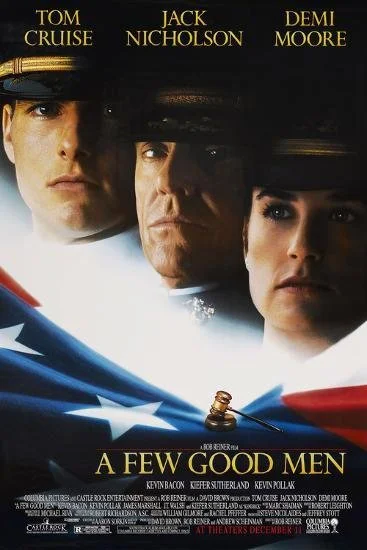
Few Good Men is a 1992 American legal drama based on Aaron Sorkin's play from 1989. It was written by Sorkin, directed by Rob Reiner, and stars an ensemble cast, including Tom Cruise,
Jack Nicholson, Demi Moore, Kevin Bacon, and Kiefer Sutherland. The plot follows the court martial of two U.S. Marines charged with the murder of a fellow Marine and the tribulations of their lawyers as they prepare for the case.
Anyways, this was Stephanie's pick. Steph, why did you choose this movie?
Steph (01:12)
Yes. Okay. So I chose this movie in this week, this instance, because it was suggested by you that it was something you felt like. But secretly I've been wanting to suggest this movie probably since week four of movie club. I've been wanting to suggest it for such a long time. And every time we were like,
wanting a Tom Cruise movie or Tom Cruise adjacent movie or like a 90s drama thriller or whatever, I wanted to pick it because it's so friggin' good, but it just, it never felt right because maybe we wanted to watch something new or whatever, but the stars aligned, you suggest it. I am always in the mood to watch it because it is phenomenal. And that's why I chose it. And so we'd both seen it before, but I'd like to know, Netta, how did you feel about it upon this watch? And how many times had you seen it in the past?
Netta (01:56)
I mean, I think when in the like heyday of it, so the 90s, I watched it quite a few times. I mean, this was like such a classic. but it has been a very long time. Like, I'm not sure if I've watched it as an adult.
Steph (02:02)
Really?
Mm-hmm.
⁓
No way. this just got way more interesting then.
Netta (02:20)
so good. knew it was good. I had, you know, I wasn't really worried about it not being good. I just, I didn't remember how good it is. Yeah.
Steph (02:21)
Right?
⁓ well,
that's I'm very excited that you have more of a fresh perspective on it. Because for me, it's one of my favorite movies, but I watch it like every 18 months or every two years. Yeah, like I see this many times. Like I had half a page of notes written down before I even watched the movie. ⁓ Yeah, but it's one of those movies. I have my like list of rewatchable movies, right? That I've talked about. It's on there. Like it's just so.
Netta (02:43)
Really?
really?
Steph (02:59)
good, like it can be consumed over and over again. ⁓ I think the first time I saw it was maybe in the later 90s. And I remember not understanding fully what was going on with like the fence line and blah, blah, blah. So it's been nice to watch it as an adult, but I have, I don't have that feeling where I've stepped away from it and returned to it But every time it's better, better.
Netta (03:17)
which is like the best thing, right? When like each time you watch something, it's like a little bit different. You notice something a little bit new.
Steph (03:23)
Yeah, you pick out, yeah, like this time I completely
have never noticed before that ⁓ it was written by, sorry, the play was like Aaron Sorkin's play. I was like, what? ⁓ And then written by him. And then I was like, ⁓ it makes sense why it's so good. Like why the dialogue is so witty and clever and banter and well thought out. And then it reads as a play too. Like you can see how it could.
play out as a play. And then like the the end at the end is just. Cornball, but like I love it. ⁓ I actually was musing like it hold like the story and everything holds up, but like in the end it gets a bit like cheesy in a way. But I think that leans more to the idea that it's like a play.
Netta (03:58)
Yeah.
Yeah, I think one of the reasons that the movie held up as well as it did is, ⁓ I don't know, I just feel like it is so 90s in the sense that it's like fun and interesting kind of thriller and blah, blah. But it's got like just enough substance to make it feel like.
Steph (04:25)
Mm-hmm.
Mm-hmm.
Netta (04:33)
There's something really interesting going on here at the same time. Right? it's
Steph (04:36)
Yeah, 100%. I think it's more...
Sorry, go on.
Netta (04:40)
Sometimes I think you watch movies and you're like, ⁓ is this like, actually a very serious movie that was taken in ⁓ a weird direction that doesn't match it. But that's not the feeling here at all.
Steph (04:49)
Mm.
We've come across this a couple of times where there's like a very like the content of the movie is very serious, right? Like it sounds serious when you read like the plots, two Marines charged with murder. my God. Like, but there's something about it that it's still fun and light and like an easy watch in a way. we've talked about that before with another Tom Cruise movie, I think. Like there's a charisma he brings. Remember this? I can't remember.
Netta (05:15)
Yeah. Was it Jerry
McGuire? Yeah.
Steph (05:18)
I think it might've been Jerry Maguire. Like there's just
a charisma he brings to the table that makes things light inherently. Like he can make it feel, I don't know, easier to digest perhaps.
like other dramatic movies are so serious the whole time.
Netta (05:30)
Yeah.
That's the thing, it just totally, I had completely forgotten that it was funny at all. It's really funny. Yeah.
Steph (05:38)
Yeah, it was so funny. think this time I found it to be the most funny yet.
Like there was such good lines. I started writing some down but then I stopped because it was taxing. like, like Tom Cruise's character is quite funny and witty. the kind of back and forth he has with his buddy is funny. Yeah, with Sam and then even Kevin Bacon's character, ⁓ Jack Nicholson.
Netta (05:58)
With Sam, yeah.
Steph (06:05)
is also phenomenal. And though he's not like maybe supposed to be funny, ha ha, like he says things that are funny, like when he's like, "Hey, go and then train the guy and I'm going to hold you responsible and if it doesn't work out, I will kill you." Like it's hilarious, but it's not like funny, "Ha ha." So over that, like there's just, I don't know. I don't know how to explain about it. There's something about the way he talks that like it's ridiculous.
Netta (06:23)
you
Yeah.
Yeah, yeah, I think it's a type of humor that's, ⁓ like you're saying, it's not laugh out loud funny, but it is... ⁓ He's meant to be amusing as a character, as well as terrifying. He's amusing and terrifying.
Steph (06:39)
No.
Yes, yes, he's amusing. That's the word. Yes.
Yes, Netta. Like some people are funny and some people are amusing because they're characters and he's a terrifying, amusing man. Every, I was just gonna say every character in this movie is also like very like their own character. Tom Cruise is very, is kind of like.
Netta (06:54)
Mmm. Mmm.
Steph (07:06)
Bumbling boy genius, quirky, charismatic type thing. And then he kind of comes into his own. Like Demi Moore is kind of like the straight shooter in the rule. Everybody has their fun
Netta (07:17)
actually, just thinking of that, like one thing that occurred to me watching it, like there are some lines that get repeated through different characters, like the same wording comes out of different characters' mouths, like this thing of describing Marines as ⁓ these are the guys up against the wall, I think that was the wording, or, you know, I save lives or whatever, like this certain
Steph (07:32)
Mmm.
Yeah, yeah.
Netta (07:45)
things that stood out, I think, as I watch it, because those were important in the courtroom scene at the end. They're such memorable lines in that context. So then when they come up throughout the movie, it's really interesting. I don't know. There's a of a buildup.
Steph (07:55)
Mm-hmm.
Yeah.
Yeah, I don't know if this is what you're kind of leaning into, but like there are some like through lines, right, that we kind of get lightly at the beginning. And then as we get further, I think into like the Marine, like the Guantanamo Bay Marine culture, they start to become more obvious. But like this idea about like the code, right? Unit,
Code, God, Country, that's what it is. Unit, Code, God, Country. that's kind of mentioned at the beginning, it's like they're fanatical. And then Dawson's like, this is my code. And he says it very honorably and gently. But then we start to get into it. then we see not Markhamson, Kendrick, Kiefer Sutherland's character when he's on the stand. He's like a lunatic. He's like, I only recognize this law.
Netta (08:22)
⁓ Yes, yes.
Steph (08:49)
and this law and blah, blah, blah, blah. You really start to get it. same with Jack Nicholson. It's just leaned into more. It all builds to make that ending that much more impactful
Netta (08:59)
Yeah, it's true. feel like, ⁓
You really get a sense of the Marine specifically. I think, you know, you could say the military generally, but here really specifically the Marines and specifically the Marines at Guantanamo Bay. Of that as a world unto itself that has its own way of operating that operates on these principles and these values and this worldview and
Steph (09:15)
Yeah.
culture.
Netta (09:31)
this code and this way of conducting yourself and this way of relating to others.
I think you're right. one of the things that this movie does is build us up as the audience and our understanding of how serious that is. we start out, we're basically, we're Tom Cruise, right? Where he was just kind of like a code. Okay. I guess. Fine. Who cares? Sure. but we have Demi Moore.
Steph (09:43)
and
Yeah. Mm hmm. Mm hmm. Yeah, like, sure. Cool.
Netta (09:58)
really ⁓ who understands that culture much, more, who is dragging us along into understanding that more from that kind of inside perspective. We've got Sam, who's like translating some of the jargon and explaining things to us. And we've got these characters like Jack Nicholson's character, Kiefer Sutherland, the two Marines who are on trial.
who embody that code in different ways. so it builds up in terms of like, this is something we're taking very seriously. And then that clash at the end, it's like, whew.
Steph (10:29)
Yes.
Mm-hmm. ⁓
Yeah, you see it and like, whoa, whoa. You see, think like two things I was going to say. I think in that clash at the end, when you really see it and like this idea of like that code being the prevailing law for a lot of people, like Jack Nicholson doesn't even understand that he's done something wrong, right? Like he shouts it out and then he's like in disbelief that he is now going to be hauled away because in his mind, he followed the code.
Netta (10:43)
Whoa.
Whoa.
Steph (11:09)
That is the law. That's how you keep people alive. And that's how you keep them safe. But that's not the world that the rest of the world or the rest of America operates in. And I think the thing that they do also to add kind of like gravitas to this idea of this code is I think they do a really good job of like distinguishing between like you said, like the subculture of not only the Marines, but the Marines in Guantanamo. Like I think Tom Cruise is talking to Sam.
And Sam saying something about like they shouldn't have killed him, blah, blah, blah, and Tom Cruise is like, we have marching bands and softball games. They have to wear camo or they're going to get shot. So it, and that kind of idea comes up a couple times, right? Of like the, yes, we're all in the Navy or we're all in the Marines or whatever, but that looks very different based on where we are. And so I think they do a really good job of showing that as well.
Netta (11:53)
Mm-hmm.
Yeah, I feel like Sam. So, okay, we have this like trio of lawyers where Tom Cruise is lead counsel on this. Demi Moore has like bullied or hustled her way in, if I mean, we have to talk about her character I love. And Sam, who is a co-worker of
Steph (12:03)
Mm-hmm.
weasled her way in
⁓ yes. Phenomenal.
Netta (12:21)
Tom Cruise and gets put on as like support counsel, whatever the term is. ⁓ And I feel like Sam and Demi were, are there as kind of like advocates for these different perspectives on the case?
Steph (12:23)
Mm-hmm.
Netta (12:42)
Right? Demi Moore is like very sympathetic to the Marine. She understands what this world looks like more so from the inside. And she is kind of looking at them through the point of view of this code, right? Or through the lens of this code. And Sam is looking at them, like he's, you know, committed to being their lawyer and blah, blah, blah. But he's looking at them and making his own judgment based on the
Steph (12:42)
Mm-hmm.
Mm-hmm.
Yeah. Yeah.
Netta (13:09)
sort of the values or the code that exists outside of the Marines and more just in like American society at large, which are equally, given weight. yeah, I mean, for Sam, you know, they were bullies. They followed immoral orders.
Steph (13:16)
Like life.
like equally understandable.
Netta (13:31)
And picked on the weak. this is opposed to the set of American values. that like, he is, is looking at them through
Steph (13:35)
Yeah.
Netta (13:42)
she's looking at more through that internal code of like, you are part of a collective, you are putting your life on the line. The person beside you is putting their life on the line. They're also putting your life on the line. It just sort of these two sides of like American values, I guess. And I feel like it's, I don't know, it's just interesting that like Demi Moore,
and Sam are like, you know, these kind of two sides of it.
Steph (14:07)
Yeah, I think they bring like a really good balance And then you can see Tom Cruise kind of like, wait, like it's interesting. I'm kind of saying like, he never really has a strong opinion one way the other. He's just trying to wade through the facts and figure out like, what would be kind of like right or fair. I think like from an audience perspective, at least I feel like both Sam, Joe.
Netta (14:19)
Mm-mm.
Steph (14:30)
I feel like we're calling him Sam and Demi.
Netta (14:31)
yes. Yes, that's I
wanted to say too. But yes, Demi Moore's character, Joe and Sam. Yeah.
Steph (14:36)
Joe, both of them,
I think, are right, right? I think it's interesting because I think Sam is coming from the perspective of the bullied kid. Like, he himself was probably the bullied kid and is sad that this kid has been bullied and is now dead. But Joe sees larger institutional problems that have caused that. And so she doesn't see these two as being taken down as like the fall guys for a bigger issue as
so I think both are right. And that's why I think how it ends is like great. Cause like these guys don't deserve to go back. Like they still did this terrible thing, right? They stood like, even though it wasn't like an order and they had to do it. Like, I guess they could have said, no, someone else might've done it, whatever, but like they still did it. So you should probably not be the Marines anymore, but, but they're not convicted of murder and Jack Nicholson is held on account in this bigger system.
Netta (15:27)
Yeah, I mean it's interesting you say that about Sam.
this character is Jewish. Like he, he has like a Jewish last name, blah, blah, blah. And he brings up the Nazis as like this thing of just following orders. I mean, that's just like the shorthand for like, why we don't just follow orders
Steph (15:30)
Yeah. yes.
Yeah.
Netta (15:43)
And so I think that like, he's looking at this in terms of, ⁓ know, you can't, know, what, what, what meaning is there to morality and to accountability and to the law and to whatever, if your personal responsibility is just, gone because of, ⁓ you were just following orders or you're just part of this.
machine, so to speak. And if you agree to kind of subject your ⁓ moral judgment to that. And yeah, I don't know, I feel like, but yeah, I feel like you have these these two sides that are complementary to each other. But in this movie, this is about an instance where those two sides come into conflict.
Steph (16:28)
Mm-hmm.
Netta (16:32)
And you're so right about Tom Cruise, because normally I feel like you would say, okay, Tom Cruise, he's the guy in the middle of all this. He's like the lead character. He's the star. He's going to be like the synthesis of these two ideas, but like, he's not, he's not, he's, he's the law, right?
Steph (16:45)
No.
his quest, I think it's quite like Sam is, think, quite conflicted about representing them because he doesn't really agree with the actions he took. And he's like, but I'm a lawyer and this is my job. Whereas Demi, Joanne is very invested in like helping and saving them in this and the other and getting to that bigger truth. And I think
that Tom Cruise, It's like he's taking this on as his own personal journey. Like I'm going to challenge myself.
to stand in his courtroom and like Demi says, like, make an argument and see where that goes. And then it's like, he's pushed and pushed to like, actually be a lawyer and find the truth. I was going to say though, on the note of like this two sides and this idea about following orders, how do you then feel about Dawson's little speech at the end about like, what we did was wrong. We were supposed to stand up for people like him. Do you feel like it like...
marries kind of both ideas well.
Netta (17:42)
I, yeah, I was thinking that like, was thinking like,
actually, Dawson, who even though the two Marines that are being charged are like at the center of the story, they don't get a lot of lines or screen time. guys. But who they are really does come through. And Dawson, like one of the that speech that he gives where he says, No, it's right that we can't go back to the Marines, blah, blah, blah, even though he
Steph (17:53)
No, which is probably for the best.
Yeah.
Netta (18:09)
He's so, so in line with the code. But then you also hear through testimony that he has put his own judgment on things at times. Anyways, for him at the end to say, no, what we did was wrong. ⁓ Yeah, think he's the sense that he's that perfect bringing together of these two ideas. like.
Steph (18:12)
I know.
Yeah.
Netta (18:34)
you know, only after bringing them together imperfectly, I guess, because he did accidentally kill that guy. Santiago. Poor Santiago. He shouldn't have been there.
Steph (18:40)
I know. rip. I know.
I know. I was going to say it's like I wasn't laughing, but you're right. Like he does bring it together in this beautiful synthesis at the end. I feel like you have Tom Cruise who's like, yeah, I won. I made an argument. then you have this beautiful speech from Dawson, like bringing together the moralities and the essence of the movie. Meanwhile, Tom Cruise is like, ha!
Netta (19:04)
Yes.
And you know what, okay, okay, If we have this kind of thing going on with Sam and Joe and them kind of representing these two things, and it's brought together by Dawson, I feel like then you get Tom Cruise and Jack Nicholson, where Tom Cruise eventually, through his beautiful character arc and his story, you know, he is like the law.
Steph (19:29)
Mm hmm. Yes.
Netta (19:29)
where it's about
the truth and it's about procedure and it's about what you can prove and it's about the story you can tell. It's about doing your best by your client, blah, blah, blah, blah.
Steph (19:34)
Mm-hmm.
Netta (19:37)
And then you have Jack Nicholson, which is all about lawlessness. And really it's more about being a king of your own kingdom. He is the king of the Guantanamo Bay castle I guess, and he is above the law. And Tom Cruise is about, no, no one is above the law.
Steph (19:51)
Yeah
I know it's interesting though. Okay, let me throw this out there. And I don't know where I'm going with this necessarily. Cause I agree, like Tom Cruise is more of that like, and like the lawyer team is more about that kind of like individualistic, like you did something wrong, you're going to be punished. ⁓ Jack Nicholson's perspective, yes, it's like very like dictator kingly of his whatever, but it is also this idea of like the greater good for the unit and the country.
Netta (20:01)
Yeah.
Mm.
Steph (20:27)
I'm like.
don't wanna say like I agree with him because like no, you can't just code red people and have them killed. If you're a leader, that's not how you should lead.
I don't know what I'm trying to say. Like when you look back in history at the like empires that these amazing armies and this or that, like they discarded the weak. Like that's what they did. And so I'm not saying it's right, but I'm just trying to say like that's like, it's interesting because in his last speech,
He's not 100 % wrong. How he deals with it is completely incorrect by like today's standards, but this idea of like this person was not cut out to be there and they needed to not be there. Not wrong.
Netta (21:05)
Yeah, I think you're so right. And this just this just occurred to me while you were talking.
One of the really good things about this movie, think, why it works is that the scope of the conspiracy was not like silly and big and
Steph (21:21)
Yeah. ⁓
wait, I just thought of a terrible way they could have done that if it was like a senator's child and like a there was like a love story and a this and that and a cover up and a murder by night. it would have been so bad.
Netta (21:27)
Yes, yes.
and war with Cuba. They're all on the verge of war with Cuba over this like shooting over the line.
Steph (21:41)
⁓ war with Cuba! It's Lughin! The fence
line shooting is god. Like it could have been so, so, so bad.
Netta (21:52)
which actually going back to what you said before about it, seeming like a play. feels like this is the scope of a play.
Steph (21:58)
What do you yes, like like like tighter like a tighter like conflict. Yeah. It's. I have a comment about that. No, I'll come back to it. You go, you go.
Netta (21:59)
It makes more sense as it Yeah Like a smaller Yeah, yeah anyways, so yeah, go ahead
God, I feel like we took a few turns. Where did we start? right. one of the things that I think lends credibility to Jack Nicholson and makes it possible for us to hear him and not just be like, no, is that like he did not mean for Santiago to be killed.
Steph (22:19)
Mm-hmm.
Mm-hmm.
Yes.
Netta (22:30)
You know, Jack Nicholson's way of dealing with Santiago is not like maniacally evil. It doesn't feel like the cover-up throwing these two Marines under the bus.
Like it definitely puts his leadership abilities and his integrity and all of these things into question, blah, blah.
But calling a code red did not mean ordering these Marines to murder a fellow Marine. It was ordering them to shave his head. And it's, it's very scary. Like it's not, it's not right.
Steph (23:07)
No, I gonna say what's so interesting too about this is I was thinking through the movie, like I feel so bad at times for Dawson and Downey, Downey specifically, because he just doesn't understand. And it's interesting because this idea that someone died has like, like I never think to myself like, I feel so bad for the kid who died. I feel so bad for his family. Like that doesn't become the focus.
So like, you're right, like when we hear Jack Nicholson give this huge speech, though it's like, whoa, this guy's intense and that's an intense way, it's not like, repulsive. He's murdering people left, right and center, like in secret. Like, you're right. Like, it's not this massive, wild conspiracy. It's like a common practice they employ to promote strength and coherence. And it went bad. And he's having to answer for that now.
Netta (23:52)
And I guess it is, I mean, there's a whole bunch of other questions that it then brings up around like, probably really should have just transferred him off the base and like, this kid is not well and like, this is not well, like, and the fact that Jack Nicholson can pull all these strings and, you know, change the flight logs and blah, blah, like it definitely...
Steph (24:12)
Long. It makes flights disappear.
Netta (24:15)
You know, it doesn't it doesn't speak to a trustworthiness
Steph (24:19)
It's I was going to say that to your point, like, I think that's interesting, though, because, like, I don't want say we were just defending his character. We were not defending his character, but it's like you're not necessarily made out to like think he's this maniacal murderer man. But I think like what we are kind of supposed to see is like his ego getting in the way of like humanity at times. Right. So like this is a kid who absolutely should have been transferred, but he was so annoyed that this person went around him.
that he was like, this kid, keep him here, train him. Whereas probably if they had followed the normal train of command, like he might've been like, okay, but he just didn't want to like accept weakness. He didn't want to be like gone around on, you know.
Netta (24:48)
Yeah,
Yeah, no, it was absolutely a challenge to his power. And yeah, I mean, you I mean, you see him being awful in so many ways, right? I mean, the I mean, does sexual harassment quite, quite cover it when he is speaking to Demi I think you get the sense of somebody who is
Steph (25:02)
Mm-hmm.
Yeah.
⁓ my god.
feels untouchable.
Netta (25:21)
Yeah, I mean, I think it's like a bad man. And the question is, do you think he is the right man for this type of position? I think the movie says no, he's not the right man.
Steph (25:29)
Mmm
You're like, yeah good questions. The answer is obviously no
Netta (25:38)
When he is arrested at the end...
I think it is unambiguous, very straightforward, this is justice. This is what should happen. And that this guy's justification and Jack Nicholson's view on things, it's like there's this code. is Jack Nicholson the correct steward of this code?
Steph (25:46)
Yeah, totally. Yes.
Netta (26:07)
and it is saying no.
Steph (26:08)
The answer is no
not at all
Netta (26:11)
No,
Steph (26:12)
No, think I think you are correct in that, like they're like, we said, like this idea of like the Nazis and orders and all of that stuff, like they're like putting him in that leadership position and how he wields that power is not okay. And like, I think his testimony around like orders, like what people say, what I do, like he is on a power trip, like no other, and that can breed a lot of like evil.
Netta (26:41)
I think it is a fair question of this movie to say, what kind of person should do this job? Like, not Tom Cruise, not anybody else. mean, you know, I guess, ⁓ I guess, maybe Markinson, but he's too weak.
Steph (26:49)
Not Tom Cruise.
Maybe Markinson.
Netta (27:03)
I think actually Dawson, was, say more, say more.
Steph (27:07)
I know, I was just gonna say Dawson for sure.
No, I was just saying when it's like who could do this job when we look at the movie, like probably the only other person who could be in that position is Dawson and like wield it properly. Like I love the like low key throws to his character that we get. Like we kind of get this very stern, like stoic, whatever. He obviously has a ton of integrity because he doesn't want to lie and say he did it. He's risking going to jail for the rest of his life.
Netta (27:25)
Yes.
Steph (27:35)
he recognizes he's responsible for a man that is dead, even if he was following orders. He's not ratting anybody out, like he waits till questions are asked. And then we hear about how he broke orders and snuck ⁓ a man food and water because that was like the morally right thing to do. So we hear about that, which is like, this is a good man of strong character. Then we hear about how everyone's afraid of him because he's...
well-respected and strong and a leader amongst his people. So like, yeah, put him in charge. Why not?
Netta (28:07)
Yeah, but then he gets spat out. He doesn't last. He can't, he can't, he can't get to the top. the people who should be in those positions can't get there. And that's so much, yeah.
Steph (28:11)
I know. No, washed out.
because it's also political.
It's,
feel like one of those cases where like the people who are actually suited for the job are not in those jobs because it's political and they're the people for those jobs because they don't want those jobs because they're not interested in the political side of things, right? Like we even see that scene where like Jack Nicholson is talking to Markinson about how they entered everything at the same time and came up through same time, but Jack Nicholson like skyrocketed and he's like connected to all the political people. He's meeting a congressman. He's blah blah blah blah.
Whereas like, Markinson has just like stayed the course and like done his job. He's maybe, he's not like a leader per se
Netta (29:02)
Yeah, yeah, yeah, yeah.
Steph (29:02)
Yeah, yeah, these leadership
roles in America are tied up in politics.
Netta (29:06)
Yeah.
yeah. Everywhere, everywhere. I will defend America and say, not just in America.
Steph (29:17)
You know what? That's fine. That's fine.
Netta (29:20)
Yeah, but I do think that like, I don't know, you know, and this was something that Erik said, like, was there ever a better time to be American than in the 90s? Like this was like, this movie was made like peak America.
Steph (29:38)
America!
I know, even I'm like, ooh, America!
Netta (29:42)
America. How, how would a wonderful America, nobody's above the law, not even Jack Nicholson in Guantanamo Bay.
Steph (29:50)
What?
was a magical time where everything came to light.
was going to say, well, we were talking about the military. Can we just talk about how much like I love? Like military movies like I love both. Maybe you didn't know about me. Like I love like law courtroom drama movies like so much, but like marrying that with like military culture. I'm in heaven. I love it. I love movies about like.
Netta (29:57)
Yeah.
Steph (30:18)
soldiers, military, Navy SEALs are the best. I love it so much and I don't know why but I am like here for it.
Netta (30:26)
Okay, I know you just said you don't know why, but I really wanna know why.
Steph (30:30)
I don't know, I think there's something about like...
It just is like so interesting to me, I think, as like a subculture Like it's a very specific type of person who goes down this road and like ascribes this lifestyle. And then I think there's just like a I'm so impressed that there's people who want to do that.
my favorite or anything about like Navy SEALs and like the secret ops is that the other I'm obsessed because I think I'm just in awe of these humans that can like operate like just apex physical specimens of humanity to like protect us and do the things that other people won't. It's like interesting to me.
it hearkens back to an older time in humanity, And I think like, I'm such a history buff and have such a reverence for that stuff.
like for me, it harkens back to like. Like Rome and like the special Praetorians the elite and like Sparta, like they were born and bred soldiers
And like, even before that, right? Like who dominated? It was like the biggest, the baddest, the meanest, like you needed people like that. Look at like the Vikings and stuff. Like, and like, it's just interesting that like that type of person and like physical being, we've like funneled them into like these very specific, like military-esque bodies where they can thrive.
There's still a need for those type of people, which is like interesting. And so I guess I love Hollywoodized version of those. I don't want to talk like I actually know anything about it, but I just I like the Hollywood versions. I watch documentaries on Navy SEALs all the time. I'm like very into it as like a
Netta (32:08)
Wow.
Steph (32:10)
Like also from a psychological standpoint, the things they do and like how they, I don't know, it's kind of otherworldly. It's so different from the lives that most people live. It's just interesting. like movies and stuff. I just think it's like such a separate world. You know, so watching movies about that type of stuff is just so cool.
Netta (32:29)
It is very cool.
Steph (32:30)
I know, do
you love these type of movies as well?
Netta (32:33)
So I will say growing up did not.
Steph (32:35)
I feel like this is the same tone when I asked you about like action movies, you were like, well.
Netta (32:41)
So thank you.
Yeah, think it has. Okay. I think it has taken me a while in life to see what is interesting about war and just bear with me for a second. Obviously wars are very
important and blah blah blah and I understand why we study them and why they are waged and all this kind of stuff. But just like as a thing that a random person would be interested in. just haven't really gotten it until relatively recently.
I think what military movies do is they take that part of war that is about like, individuals being pushed to the edge of what humans are capable of, for good and for bad, and really zeros in on that. But for an individual story rather than like the kind of large scale look at it.
Steph (33:33)
Hmm.
Netta (33:43)
⁓ and I think you see it here to an extent, like that's not really entirely what's going on in A Few Good Men, but I think like it takes a fairly low ish stakes, ⁓ potentially low stakes.
situation, but like ups it and ups it and ups it in terms of like, what is riding on it and what it represents and what's in conflict here. So that by the end of just like, again, that scene
Steph (34:05)
Mm-hmm.
Yeah.
I know, it's so like rattling.
And they do, to your point, they do such a good job of doing it so gradually. And like the way they kind of piece it together, or Tom Cruise's character pieces it together. Like he could choose to have this over and done with tomorrow, get a plea bargain, great, great, great. Or he could choose to go deeper. And then he's like, okay, I'll go deeper. And then he's like, also, this is weird. So I'm gonna go deeper and deeper.
and deeper and then it's about like uncovering what is really going on here and so the stakes get high and then he has personal stakes as well like the idea of accusing Jack Nicholson incorrectly like I love how like that's obviously a thing but like I love how they tie that in and make it feel so dangerous for him to do that so much so that I love when he's like shaking like he takes the drink of water before he like goes for him and he's like shaking
Like, love that. But yeah, like they make it feel like there's really like big stakes here.
Netta (35:12)
Yes. And I think they keep an eye on the stakes
the order of importance here in terms of what's at stake.
has remained the whole time, one, the accused and the defendants, then his potential legal troubles and fallout, and then his legacy, especially as the son of a legendary. Yeah.
Steph (35:23)
These two guys lives, yeah.
standing.
Mm-hmm.
Yeah, the fog, I love that layer, that layer so good. Adds more
stakes, right? Like it just adds this like invisible figment that you're just like, he's chasing. And like, so there's the personal stakes of like accusing this person this, then there's like his own reputation. He's got this reputation in the office. Demi Moore keeps telling him that he's so good. So he's starting to be like, I have to live up to this. And then you throw in the dead father who had this amazing legacy and like,
I love that everybody knows that and you get hints of people mentioning it everywhere. Like, everybody knows who this guy is. Everyone thinks he's amazing. And Tom Cruise can't even find a pen.
Netta (36:15)
I do just in general really like the trope of the person who looks like they're slacking, who is actually super competent and really on it. I love that.
Steph (36:20)
my God, I made an-
what did I wrote? ⁓ I love the secret genius trope is what I wrote. Like this idea that like, I'm a bubbling idiot, but wait, I know everything.
Netta (36:28)
Yeah. ⁓
I'm a janitor, but wait, I'm a math genius?
Steph (36:35)
Yeah!
I'm just a janitor. No, I'm a math genius. what I love about this one, though, I think they do it well in that, Like he's obviously someone who'd never had to try very hard and just was so charismatic and lovely that he's like, blowing through and he's really good with people. But Demi Moore calls him on it, right?
Netta (36:40)
Yeah. Yeah.
Steph (36:54)
And then he's actually faced with the idea of Like if I can marry like all of these innate skills I have with some actual procedural knowledge, like what can happen there. And so he's actually challenged, right? Like he has to work for it. Probably the first time he's had to work for anything, which is cool.
Netta (37:04)
Mm-hmm.
Can we talk about Demi Moore slash Joe?
Steph (37:13)
Yes!
Slash Joe, we must. I was so interested Netta to ask you your opinion of her as our lead female in the movie. And you always have such good takes on women in films.
Netta (37:27)
I love having takes on women, for sure. Yeah. ⁓ I love her.
Steph (37:30)
I know you do. Hit me.
She's the best!
Netta (37:36)
I
mean, I love that we start with her. I love that like in that first scene where she's asking to be put on counsel for this case, and we see her practicing it and then she does it and it doesn't go super well, but she does not break eye contact. She sticks with it. I was like, yes, thank you. And I loved there's there's so many things but one thing that I really appreciated was like
Steph (37:40)
Mm-hmm. Yeah.
Yeah.
No, no, she's like. Yeah. ⁓
Netta (38:04)
So she has to basically like throw herself onto this case and like just kind of forces her way in. And she does so by befriending effectively or building the relationship with the aunt of one of the accused and suggesting to her that like, maybe you would feel better if I was, you know, representing your client and gets her to sign a thing saying, you know, that now Demi Moore is on the case.
Steph (38:10)
Mm-hmm.
I know.
Mm-hmm.
Yes, it's super cool.
Mm-hmm.
Netta (38:32)
I just love that because I feel like very often what happens is like the female character screen somewhere manages to set things up so she gets what she wants. And that's great. And then, you know, she's she's telling the male lead, no, I'm on the case to now. And he's like, how did that happen? And she says something like, I have my ways. And basically, I'm just like,
It just seems like women have this ability to just get what they want somehow. And I just feel like I'm missing out on this magical ability to get that. I'm like, what are women doing? What are women doing? What am I not doing? I also want to be able to get what I want and then be smug about it. That would be great. But with Demi Moore, it's like...
Steph (39:03)
Yeah.
Yeah, like what are women doing behind the curtains? ⁓
Mm, have your ways.
Netta (39:25)
that's what she did. I could do that. I know how to do that. And that makes sense. And I think you see her just having to prove herself, having to push herself ⁓ into situations, not being taken seriously. And I think it does really speak well to Tom Cruise's character that I think a turning point for him where he starts to take things more seriously and really starts to...
Steph (39:28)
Yeah, like befriend somebody.
Netta (39:52)
take Demi Moore more seriously and really look at Jessup as like an adversary is when Jack Nicholson says the gross thing to Demi Moore.
Steph (40:00)
Yuck.
Netta (40:02)
And she, again, she does not break eye contact. She does not lose sight. Girl.
Steph (40:04)
No, I was going to bring that up. Phenomenal. She like,
I know she I was going to say, like, even after she goes in and she asked me to put on the case and when Tom Cruise and Sam show up, she is not threatened by this. Like, she's just so strong. Like, she's never kind of like feeling like submissive to the male presence. And I was going to bring up when Jack Nicholson said this, like she does not.
break. I really like. I don't know if this is good for feminism or bad. But like, I don't know. I love in movies.
female characters and male characters, characters that are just so well developed as characters and as people that they could be either gender. Like if you think about this movie, her character could easily be a man. And like almost nothing would change. And like, I love that. Is that good or bad for-
Netta (40:45)
Mm.
I don't know, I think it's fine.
Steph (40:57)
It's fine for feminism. It's like nice to just see like a strong
Netta (40:59)
I'm done.
You
Steph (41:06)
competent woman be strong. And she like asked him out on a date. I wanted to ask you how you felt about that element of the story. I think they have amazing chemistry. I'm here for it. It's not necessary, but why do I like it more? don't.
Netta (41:20)
it's great. ⁓ yeah, I think it adds to it. ⁓ Nothing, I mean they go on a date, they don't even like, I don't know, kiss or anything but that's
Steph (41:22)
Yeah, you like it too?
Yeah.
I love that
they don't kiss at the end. Because they could have. But why? Why add that though?
Netta (41:33)
Yes, okay. Yeah, it's true.
You tell me.
Steph (41:37)
No, you don't add that. No, it's like all these movies always have people kissing at the end. And I feel like in a lot of ways it makes sense in this story, I think it would have been an insane choice because they've both demonstrated themselves to be incredible professionals. So the idea of sharing a smooch in this courtroom would be insane.
Netta (41:39)
No.
Steph (42:00)
like a kiss?
Netta (42:01)
I do love that she asks him out, feels very in character. ⁓ you get the sense from her, like she's not batting an eye when Jack Nicholson talks to her like that because she's heard it before and she's still there. She's still risen through the ranks and she's like, stubborn. She does things properly. She does things fully. She's got a passion for justice.
Steph (42:12)
Yup.
Netta (42:23)
also like Demi Moore specifically because I feel like she is I mean she's she's quite feminine in the sense that she is like very beautiful and like oh my god and like she has a kind of like calmer energy and a blah blah blah but like
Steph (42:29)
Mmm. She's so gorgeous.
Netta (42:43)
there's also a certain gravity and I don't know if it's just because like her voice is a little lower like something as like just surface level is that but I think it just like her whole vibe is of like you're saying professionalism and competence and drive and like and a sense of like
fighting for the weak among those who have to be strong all the time.
Steph (43:07)
Mmm.
Netta (43:08)
And she's like, in this culture in these institutions that ⁓ punish her for the things that she brings to it. Yeah, I don't know.
Steph (43:23)
She has such a
strength. I'd like you to remember all of these comments and pretend that you said them leading up to whenever we watched G.I. Jane I'd like you to just remember all of this conversation and these comments and everything and like pin them in your mind for when eventually we watch G.I. Jane. No, you had a movie pick for our first. For our first.
Netta (43:30)
Sorry.
Okay. All right. Maybe I'll just use it now. I don't know.
I know,
but maybe this is our first episode. mean, seriously.
I have a question for you because there's one scene I just I don't understand in this movie.
Steph (43:56)
Please,
because there's one scene that took me years to understand, so I'm wondering if it's the one you're gonna say. Go.
Netta (44:01)
So the movie starts with Santiago's death. Yes. And then there's a scene after Santiago's death where Jack Nicholson and ⁓ Kiefer Sutherland and the other guy who is a very good actor, but I don't know him. JT Walsh are chatting about what to do about Santiago.
Steph (44:05)
Yeah, I know exactly you're saying.
Hendrick. Yep. Mark JT, JT Walsh.
Netta (44:24)
as if he's still alive and I did not, I don't get it. What's happening there?
Steph (44:28)
This scene drives me crazy. Someone fell asleep on the editing floor. So like, it took me years to understand this, but it's not like a current state conversation. it's like a flashback scene, but it's not set up as such. So it's incredibly confusing.
it's supposed to give us the idea of what went on, right? That he wasn't going to be transferred so that we can know that he wasn't going to be transferred that Jack Nicholson took a hard line. But this idea of if he ordered the code red or not was still ambiguous. It's just it gives us enough.
Netta (44:58)
⁓ right.
Steph (45:00)
to be like, ooh, there's things we know that they can find out, but not too much that we're still very invested in the outcome of movie.
Netta (45:09)
I did not get it. Yeah, okay. if we treat it as a flashback, it makes sense. great.
Steph (45:10)
It's confusing, ⁓ It's the worst.
Yes, it's a flashback.
I know, like
for years, I thought they were like staging that conversation that post his death. Like it took me so long to understand it's a flashback. And I don't know, I thought about a lot about this while watching it yesterday. I wrote it down as a note to like where I would put it, that scene with respect. I put a lot earlier than when it appears or I'd put at the bottom of the screen like seven days prior.
Netta (45:22)
Yeah.
Okay, great.
Where would you put it?
Thank
Steph (45:44)
and then you see the scene and then you see them rolling up to Cuba like in the present moment. Because I think like where it's placed is is good amongst the rest of the context of the movie that we have. But they just need to let us know that it's a flashback like or make it in black and white or blurry or something. don't know. Confusing.
Netta (45:58)
Yeah. Yeah.
Yeah, whatever movie magic
they have to tell us this is a flashback.
Steph (46:06)
There's so
many ways, so many ways in which movies can do this, and they chose to do none of them.
Netta (46:15)
He
Steph (46:15)
This would probably be my only criticism of whole movie.
Netta (46:19)
That's the thing, by the end of it I was like, is this a perfect movie? But then I thought about that scene and I'm like, I don't think it can be, you know?
Steph (46:27)
was so, so close. I wonder if there's a director's cut somewhere where that scene is placed elsewhere.
Netta (46:32)
Who doesn't like this movie? Does anybody not like this movie?
Steph (46:37)
⁓ everyone loves A Few Good Men.
Netta (46:36)
no, A Few Good Men.
Steph (46:38)
And just so many amazing movies from this
Netta (46:39)
you
Steph (46:42)
the 90s was such a good time for stories, actors, moviemaking. Like when we pulled it up and it was like, oh, if you like this, here's others. And it was like banger after banger after I was like, oh my God, so good.
Netta (46:59)
This isn't all of it, obviously. But like one thing that has changed that other people have pointed out, I'm just parroting other people, but I agree with this. I think this is true. That like this thing of like the mid budget movie. not your indie film, but also not your blockbuster.
Steph (47:14)
Mm-hmm.
Mm-hmm.
Netta (47:17)
So like
a studio film that is like, I don't know, not a huge amount of money. It's not Marvel, it's not whatever. Those became much more scarce at a certain point. We need so many more of those.
Steph (47:25)
Mm-hmm.
I know you're so
Maybe special effects as well. Like the 90s was kind of pre CGI.
Netta (47:41)
I think it was early CGI. So I think it was like, ⁓ could be wrong about this, but I feel like in the nineties, what you had was like, CGI being used in smaller ways, which I think was kind of what we're getting back to.
Steph (47:43)
Yeah.
Yeah. I know, like
Netta (47:57)
whenever there's a new technology in movies, And like, and it gets to a certain, ⁓ point where it's actually like good now. it gets used like a ton for like 10 years, and then it kind of calms down. So like, when sound was first introduced to movies, like not too much later, you got musicals.
Steph (48:08)
Mm.
Yeah.
Mmm.
Netta (48:22)
I think that CGI kind of had a similar thing where it was introduced when it was first being used, it wasn't ⁓ super great. So it was kind of used here and there more complimentary.
Steph (48:35)
Mm-hmm.
Netta (48:35)
And then things kind of advanced to the point where you could do like these really, really amazing things with it. ⁓ And so you got like 10 years of like huge Marvel movies being like absolutely dominating. And I think maybe, I don't know, maybe now that'll kind of calm down, you'll get it more integrated. I feel like maybe AI is the next thing where like, I think you have seen it be used.
Steph (48:49)
Mm-hmm.
I think so.
oooo
Netta (49:02)
quite effectively, I think in some cases, like I know in The Brutalist, they used like some voice AI things to basically round out the accents of some of the actors which I think worked super well.
Steph (49:11)
Interesting cool
Netta (49:14)
So I think that's like very like sparing but thoughtful and like good use of AI. ⁓ I wouldn't be surprised if like AI gets to a point where it's more sophisticated if it's used in like much bigger ways for a while. And then it kind of, you know, calms down a bit and like 10 years later, it's goes back to just kind of being integrated and
Steph (49:15)
Mmm.
Mm-hmm. Yeah.
Yeah.
Yeah. Yeah.
Netta (49:40)
⁓ in
more normal ways or whatever.
Steph (49:44)
Yeah, that's so true. So true. There's always the big like, huh. And then it goes back to like. Like like practical effects, that's what's called. I've been trying to think about that for 10 minutes. Practical effects were like big in the 80s and 90s. That's when they had and CGI comes in, it dominates. And then all of sudden movies start coming out with practical effects and it's like, oh, they use practical effects for this. It's like Bravo. And like, yeah, the same will come. Like around for like every new technology or every new thing, there's like.
Netta (49:53)
Yeah.
Mm-hmm.
Steph (50:11)
the influx and then it's like, they didn't do that? Good for them.
Netta (50:15)
Yeah, no, that is super interesting. What a great movie.
Steph (50:18)
⁓ Yeah. ⁓
the best, the best. So good. Just it's one of the only dramas I think I can watch over and over and over again, because it does have a lightness to it as we discuss. But yes. So. What are you? No. This was. yeah. Sorry, I was asking you because it's your pick.
Netta (50:26)
You
Yeah.
What are you? No, what are you in the mood for now? This is...
I know,
but that's, you know how this works. I don't need to. It's late. honestly, as we were talking about like the, the, the whatever the whatever we were just talking about, I was like, my God, I'm losing the ability to put together a sentence. No, not at all. I love it.
Steph (50:53)
Incorrect. I know. I know.
Fading, fading. I know, I'm sorry we talked about things unrelated to this movie for so long.
I know. ⁓ What am I in the mood for next? Well, you said you had an idea of what you wanted the next one to be.
Netta (51:19)
I did. I'm not as wed to it, but yeah, I don't know. I'm just curious. Like, what are you in the mood for? What are you feeling right now?
Netta (51:44)
Thanks for joining us here at Popcorn Moms. If you like what you heard, we'd really appreciate your support. Subscribe to the show, rate and review us, and most importantly, share it with someone you know. Thanks for listening.